The 1883/2 Shield
Nickel Web Pages
FS5c-013.3 S1-5004
On this page we will examine
the FS5c-013.3 shield nickel. This
variety is a relatively recent discovery. Since it is fairly similar to FS5c-013,
it is possible that coins previously identified as FS5c-013 are really FS5c-013.3.
Here is a photo of the
date area of a nice example of FS5c-013.3.
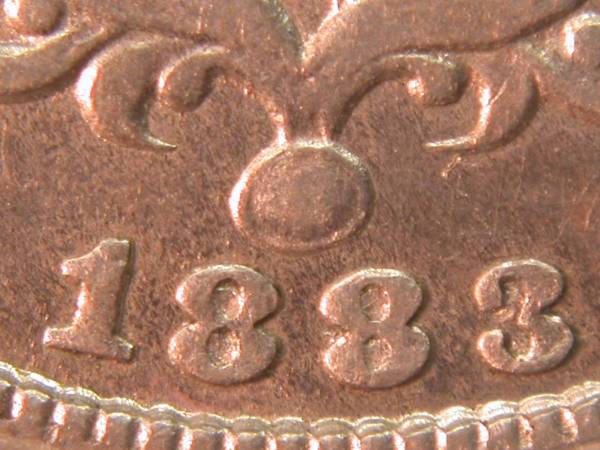
Mouse over the image
to highlight the overdate
The variety is particularly
difficult to capture in a photograph, because the relief of the overdate is
lower than the other varieties. If you look hard, you can see nearly the entire
underlying 2 in the photo above. The left base of the 2 is slightly left of
the middle of the space between the second 8 and the 3.
Because of the similarities
between FS5c-013.3 and FS5c-013, the two varieties will be compared on this
page to assist the reader in properly attributing them.
Here are pictures of an FS5c-013.3 on
the left and an FS5c-013 on the right.
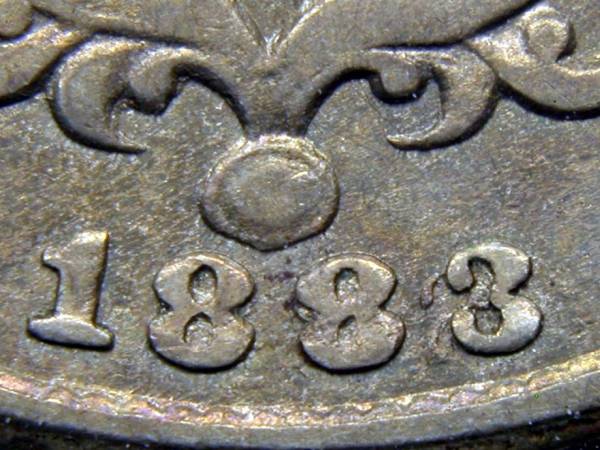
Key points to look at when
comparing FS5c-013.3 to FS5c-013:
- The overdate is much
more difficult to see on FS5c-013.3. You may have to use your imagination
a bit on the picture to the left above.
- The 2 on FS5c-013.3
is very slightly farther left. This is also difficult to see.
- The 1883 date is punched
slightly lower on the coin on FS5c-013.3. Look at the relationship of the
date to the rim and the ball above the date.
- The ball above the date
is fully round on FS5c-013.3. The ball has a scalloped appearance on the bottom
on FS5c-013. The scalloping of the ball is probably due to the date being
punched higher and the punching of the date pushing some metal into the ball's
cavity on the die.
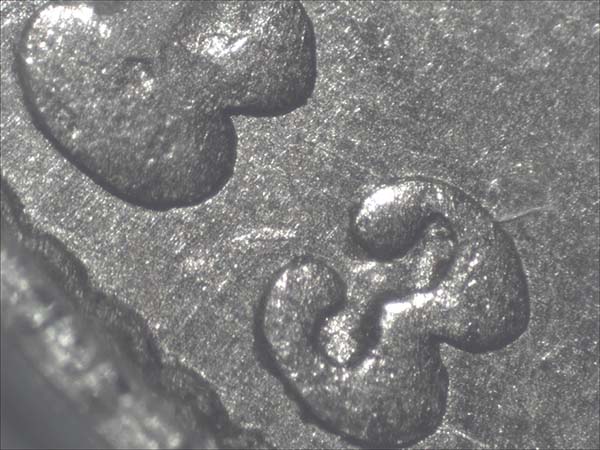
Here is a photo of the overdate (courtesy of Bernie Turner) which does an extremely good job of capturing this overdate.
Die stages for FS5c-013.3 obverse
show some minor increases in light cracks on the obverse.
Die stages for the reverse
are as follows:
| Early |
No die break to a light die crack. (example: see first photo
below) |
| Middle |
Die crack progressed to a die break. (example: see second
photo below) |
| Late |
Die break progressed to a retained cud. (example photo coming
soon) |
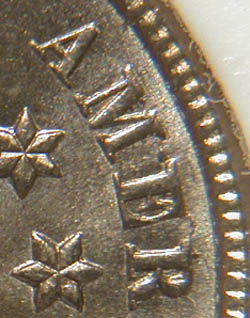 Early Die Stage
Reverse
Early Die Stage
Reverse
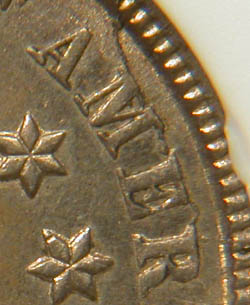 Middle Die Stage
Reverse
Middle Die Stage
Reverse
When the
reverse die break is present it may be diagnostic for FS5c-013.3, but early
die stages without the strong die break exist. Additionally, this reverse appears paired with a different obverse which is not an 1883/2, pictured here.
For reference, here are
pictures of the full obverse and reverse of FS5c-013.3.
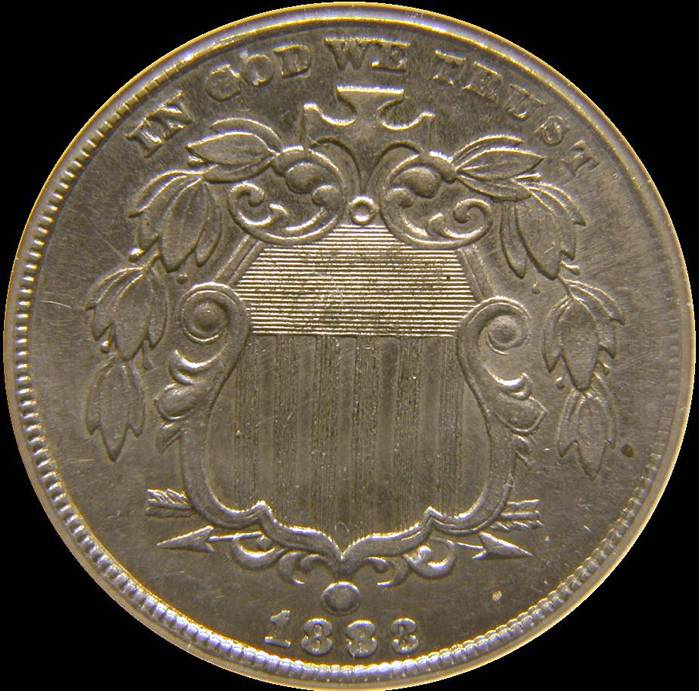
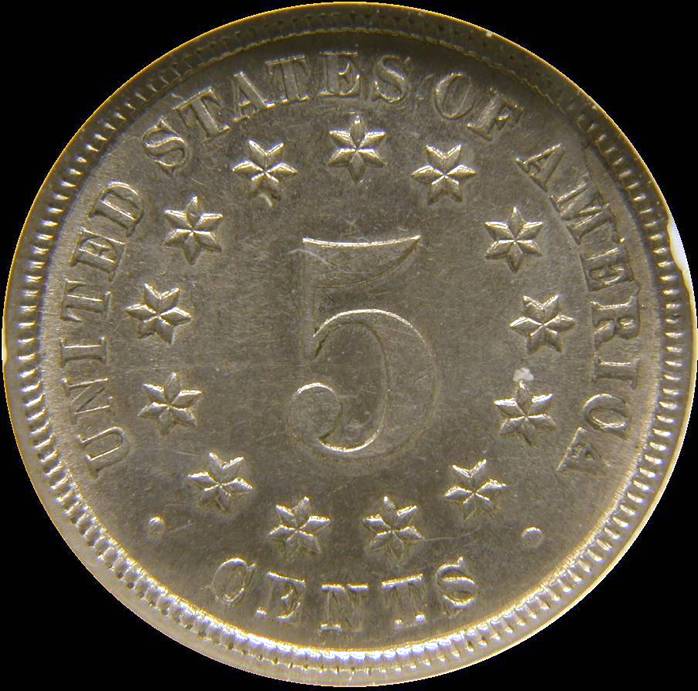
The full reverse picture
shows a middle die stage coin.
1883/2
Varieties
Home
All text and images for the 1883/2 Shield Nickel
website are copyright (C) 2002, 2003, 2004, 2005, 2015 by Howard
Spindel